
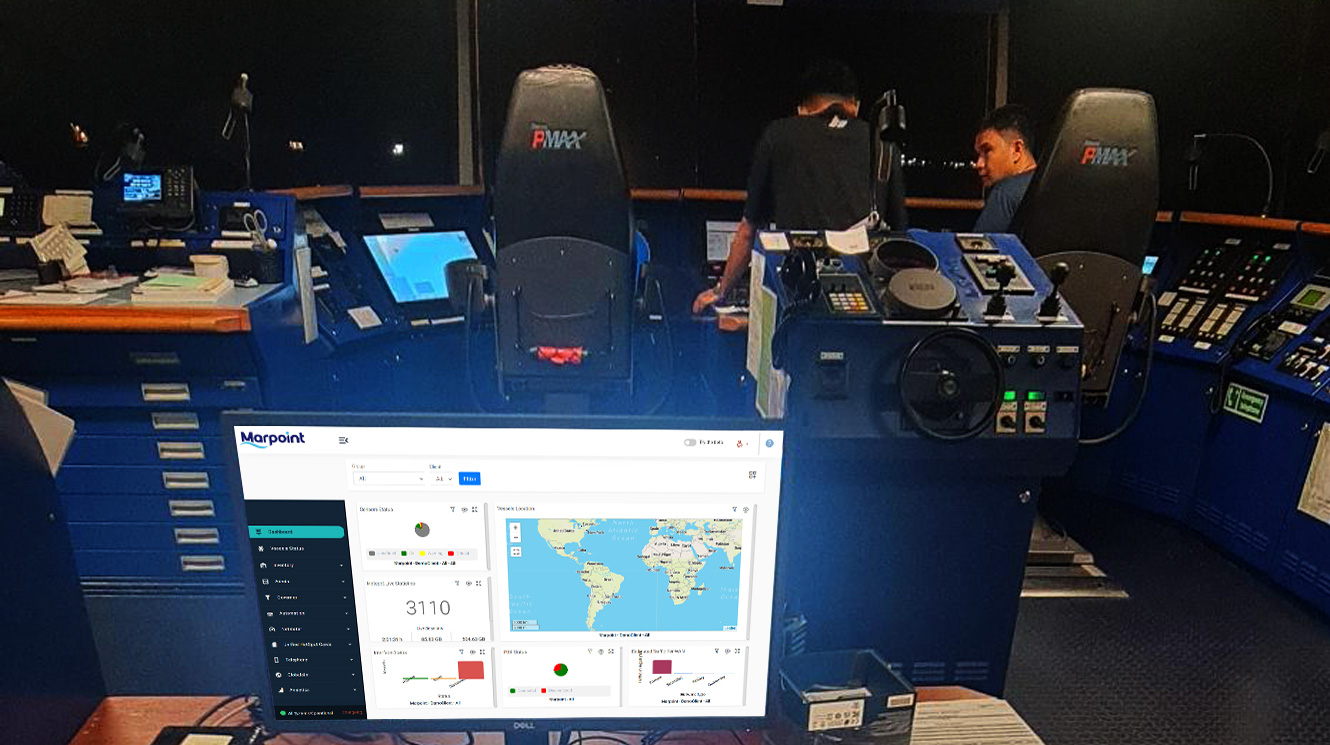
Why Crew Behavior Reflects System Design, Not Negligence
Modern vessels are equipped with firewalls, access controls, and cyber policies—yet most cyber incidents at sea still begin with entirely reasonable human actions.
A shared password to get the job done faster.
A personal USB used because the official process takes too long.
A warning ignored because it looks like every other alarm on the bridge.
These are not failures of discipline.
They are failures of design.
As ships become increasingly digital, the maritime industry has focused heavily on technology: faster connectivity, more monitoring, stronger perimeter defenses. What has received far less attention is how these systems are actually experienced by the people who must use them—often under time pressure, fatigue, and operational stress.
Cyber risk onboard is no longer driven primarily by technical weaknesses.
It is driven by how humans interact with digital environments that were never designed for real shipboard workflows.
The Human Factor Has Returned to the Center
For years, maritime cybersecurity discussions treated the “human element” as a training problem. If crews clicked on phishing links or bypassed controls, the assumption was that they needed more awareness, stricter rules, or stronger enforcement.
That assumption is increasingly being challenged.
Crews operate in environments where:
- Access controls are fragmented and inconsistent
- Systems require multiple credentials with unclear logic
- Digital workflows conflict with operational reality
- Cyber alerts are indistinguishable from routine alarms
In such conditions, workarounds are not acts of carelessness. They are adaptive behavior—attempts to maintain operational continuity when systems get in the way.
From a risk perspective, this distinction matters. If unsafe behavior is produced by system design, then no amount of additional training will resolve the underlying exposure.
When Usability Shapes Cyber Hygiene
Human behavior onboard follows a predictable pattern: crews choose the path that allows them to complete their tasks reliably and on time.
When the “secure” path is slow, unclear, or disruptive, it is quietly abandoned. When the workaround is faster and appears harmless, it becomes routine.
This is how:
- Shared credentials become normal
- Unofficial file-transfer methods appear
- Security controls are bypassed rather than challenged
Over time, these behaviors create an environment where cyber hygiene erodes—not because crews are uncooperative, but because the system does not support safe behavior by default.
In this context, user experience is no longer a secondary concern. It is a cyber risk multiplier.
Bandwidth Is Not the Problem
The widespread adoption of high-bandwidth connectivity at sea has solved one problem while exposing another.
Crews today often have faster internet access than ever before. Yet complaints about “bad internet,” unstable systems, and digital frustration persist across fleets.
The reason is simple: bandwidth addresses speed, not structure.
Without intentional system design, higher bandwidth simply accelerates poor digital habits.
Without governance, identity, and separation:
- congestion increases
- operational traffic competes with personal use
- accountability disappears
- support demands rise
The result is not just frustration. It is behavioral drift—toward shortcuts that undermine cybersecurity and operational discipline.
Cyber Risk as a Design Problem
When cyber incidents repeat despite policies, audits, and training, the issue is rarely awareness; it is design.
The most effective cyber controls onboard are often the least visible ones: systems that quietly guide users toward safe behavior without requiring constant vigilance.
This includes:
- identity-based access instead of shared credentials
- clear separation between work and welfare networks
- predictable onboarding and offboarding for rotating crews
- interfaces that explain security actions in plain language
When these elements are present, crews do not need to “think about cybersecurity.” Safe behavior becomes the natural outcome of good design. When they are absent, even well-trained crews are pushed toward unsafe choices.
From Awareness to Enablement
This does not mean training is irrelevant. It means training alone is insufficient.
Effective maritime cybersecurity now requires a shift:
- from awareness to enablement
- from enforcement to usability
- from blaming behavior to fixing design
Organizations that recognize this shift are beginning to assess cyber risk not only by technical controls, but by how systems perform in real operational conditions.
That assessment starts with asking different questions—not “Do crews know the rules?” but “Do our systems make it easy to follow them?”
A Practical Next Step
This checklist is intended for IT managers, fleet managers, and technical superintendents responsible for onboard digital environments. To support that shift, the accompanying Human-Factors Cybersecurity Checklist provides a structured way to audit cyber-usability onboard vessels.
It is not a compliance tool.
It is a design and behavior audit—focused on identifying where friction creates risk, and where usability supports resilience.
Final Thoughts: Cybersecurity Is a Human Discipline
Human cyber risk is not eliminated by stricter rules or more training slides. It is reduced when digital environments are designed around how people actually work at sea.
The vessels that will prove most resilient in the years ahead will not be those with the most cybersecurity tools, but those with the cleanest, most usable, and most predictable digital environments onboard.
Cybersecurity, ultimately, is not just a technical discipline.
It is a human one.