
For much of shipping’s digital evolution, crew experience ranked low on the list of priorities. If a vessel had basic connectivity, the requirement was considered met. Digital systems were designed primarily for navigation, compliance, and shore-side reporting—not for the people living and working onboard.
That assumption is now being challenged.
According to the Seafarers Happiness Index, access to reliable and fair digital connectivity consistently ranks among the most important factors influencing seafarer morale and wellbeing. Across multiple reporting periods, crews cite inconsistent access, unclear usage policies, and uneven digital experiences as persistent sources of frustration, particularly on long voyages.
This is not simply a welfare issue.
The same digital environment crews rely on for personal communication increasingly overlaps with operational systems, reporting tools, and cyber procedures. When that environment feels unreliable or unfair, informal workarounds emerge. Over time, those workarounds erode operational discipline and increase cyber exposure.
Crew digital experience has quietly become an operational variable.
From Bandwidth to Experience
The widespread availability of high-bandwidth connectivity at sea has removed long-standing technical limitations. But it has also exposed a structural gap.
Many vessels now have faster internet without the governance needed to manage it effectively. The symptoms are familiar across fleets:
- Congested networks
- Poor separation between crew and operational traffic
- Unpredictable performance
- Increased support demands on shore IT teams
Bandwidth improved availability. It did not address usability, fairness, or control.
A functional digital environment requires structure, particularly when dozens of users share the same infrastructure.
Why the Human Factor Matters Again
Crews today interact with digital systems far more frequently than in the past. They are expected to use electronic reporting tools, access digital manuals, follow cyber awareness guidance, and engage with inspection and audit processes.
Yet onboard digital environments often remain fragmented and inconsistent.
When systems are difficult to understand or poorly integrated, informal practices fill the gaps: shared credentials, unofficial tools, bypassed procedures. These behaviors may seem harmless, but over time they undermine both cybersecurity and operational reliability.
In this context, user experience is not a secondary concern.
It is a factor that directly influences behavior
From Improvisation to Engineered Digital Environments
Maritime cyber resilience now extends beyond devices to the digital environment as a whole. The industry is shifting toward establishing a secure baseline built on four core technical capabilities:
- Virtualization
Replaces unmanaged, hardware-dependent PCs with standardized, centrally controlled virtual environments. - Intelligent Network Segmentation and Governance
Creates controlled zones and secure routing, preventing issues in non-critical areas—like crew networks—from ever reaching OT systems. - Systematic Vulnerability Management
Enables automated, fleet-wide patching and updates to meet insurer and regulatory expectations. - Dynamic Digital Asset Visibility
Provides the real-time, auditable oversight needed for compliance, incident response, and operational monitoring.
What “Crew-Centric” Means in Practice
Crew-centric digital solutions are sometimes misunderstood as entertainment platforms. In operational terms, they are better described as structured access environments.
A mature approach typically includes:
- Identity-based access rather than shared credentials
- Transparent and predictable internet usage policies
- Clear separation between crew and operational networks
- Simple onboarding and offboarding processes for rotating crews
These measures improve fairness for crews while reducing complexity and risk for operators and IT teams.
Data Callout: Seafarers Happiness Index
Across multiple editions of the Seafarers Happiness Index, reliable internet access and digital communication consistently rank among the top concerns raised by seafarers.
The Index highlights that while bandwidth availability has improved, inconsistent access and unclear usage rules continue to affect morale, stress levels, and job satisfaction.
The findings suggest that digital experience onboard is not only a welfare issue, but one that influences behavior and operational stability.
From Shared Access to Individual Accountability
One practical response gaining traction across fleets is the move away from shared Wi-Fi passwords toward individual crew internet accounts or access cards.
This shift addresses several long-standing challenges:
- Reduces credential sharing
- Enables fair usage policies
- Simplifies onboarding and offboarding
- Improves accountability without intrusive monitoring
Identity-based access is less about restriction than predictability. It provides clarity for crews and control for operators.
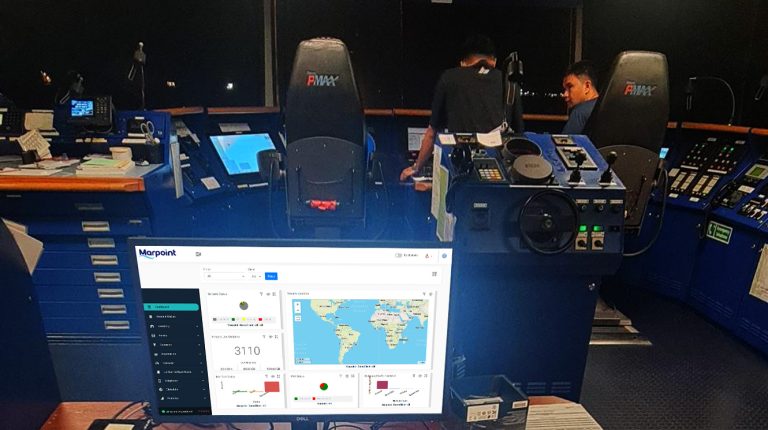
Some operators, including MarPoint, have implemented crew internet solutions built around this model, pairing personal access with strict separation from operational networks. The result is typically more stable connectivity and fewer support incidents onboard.
The Role of Companion Platforms
As shipboard digital environments grow more complex, some operators are consolidating fragmented tools into companion-style platforms—digital layers designed to sit alongside operational systems rather than interfere with them.
These platforms provide:
- A consistent digital entry point for crews
- A communication channel between shore and vessel
- A controlled gateway to services and information
When designed correctly, such platforms help standardize the crew digital experience across fleets without introducing additional risk to critical ship systems.
Why This Shift Is Accelerating
Several pressures are converging:
- Increased attention to human factors in safety and compliance
- Ongoing crew shortages and retention challenges
- Rising digital workloads onboard
- Changing expectations among younger seafarers
- Greater scrutiny from insurers and auditors
In this environment, ignoring crew digital experience is no longer a neutral choice. It introduces friction and avoidable risk.
Digitalization strategies that focus solely on hardware or bandwidth overlook a critical layer: how people actually use technology onboard.
Final Thoughts: Human-Centered Design as an Operational Baseline
The next phase of maritime digitalization will not be defined by faster connections or additional software.
It will be defined by how effectively digital systems support the people on board.
Crew-centric digital environments—built on structured access, clear separation from operational systems, and consistent user experience—are becoming a baseline requirement rather than an optional enhancement.
As the industry evolves, vessels will increasingly be judged not only by how connected they are, but by how usable and well-governed their digital environments have become.